Article
The Blight of 'Blind Handoffs'
A delivery can travel across cities, borders, warehouses, sortation centres, and routing systems with impressive precision.
Yet the moment that determines whether the experience is positive for a customer is simply where the order is left, who can access it, and whether
they can trust that it arrived safely.
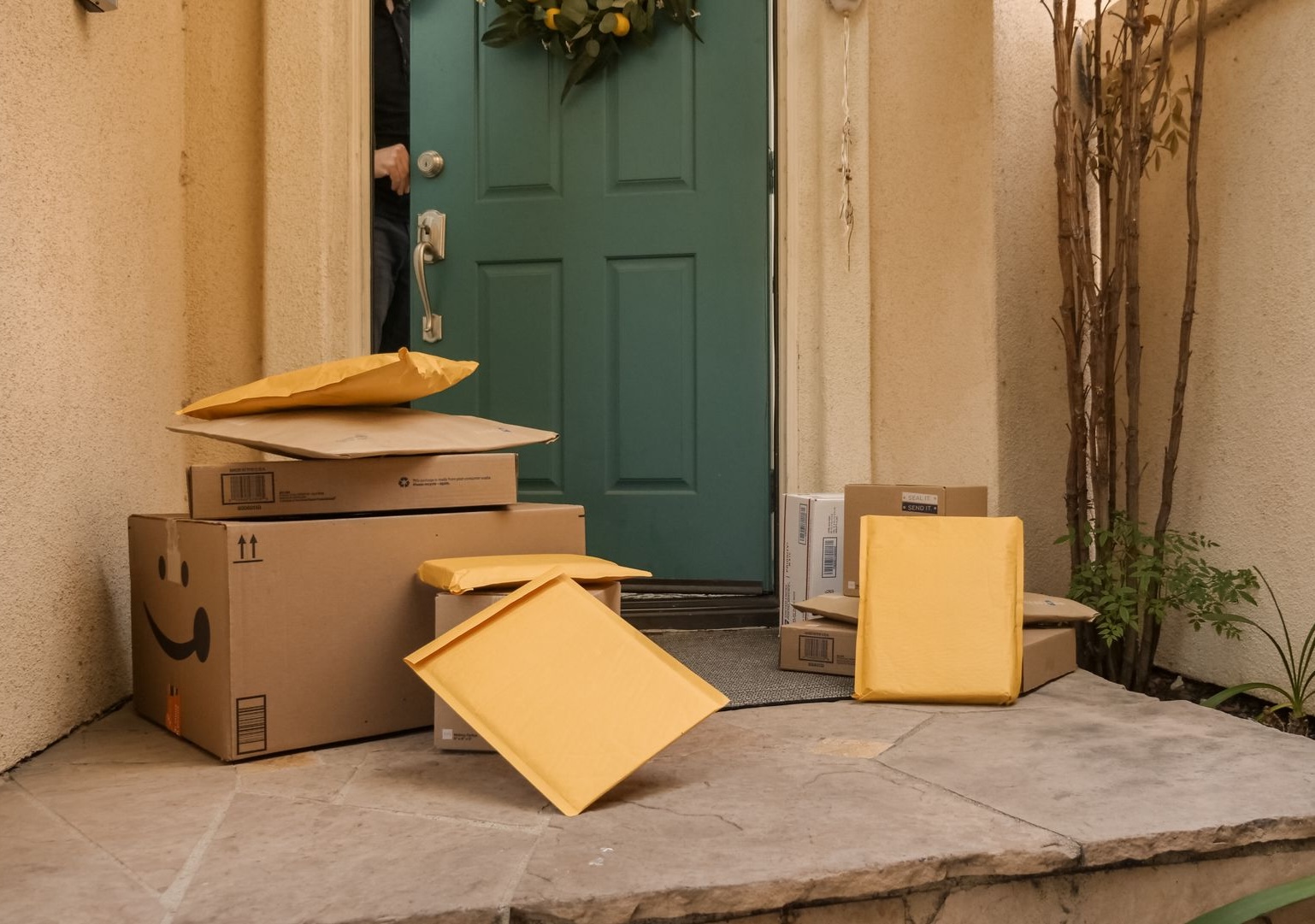
This final step is where much of the promise of modern delivery breaks down. A package may be tracked every kilometre of its journey, only to be left exposed on a porch. A grocery order may arrive on time, only to sit outside in heat, cold, rain, or snow. A customer may receive a notification, but still have no true confidence that the handoff was secure.
This final step is where much of the promise of modern delivery breaks down. A package may be tracked every kilometre of its journey, only to be left exposed on a porch. A grocery order may arrive on time, only to sit outside in heat, cold, rain, or snow. A customer may receive a notification, but still have no true confidence that the handoff was secure.
The Real Cost of Blind Handoffs
In an article on digitizing mid and last-mile logistics handovers,
McKinsey & Company
described blind handoffs as the moments when two or more parties are involved in transferring goods, and where miscommunication, information loss,
delays, and accountability issues are most likely to occur. McKinsey estimates that these handoff points create between $65 billion and $95 billion
in annual waste in the United States, with B2C delivery waste alone estimated at $18 billion to $28 billion per year.
That waste is not just an internal logistics problem. It shows up at the customer's front door.
For consumers, the problem is familiar: missed drop-offs, vague delivery windows, package theft, weather damage, spoiled groceries, and the constant need to check tracking pages. For sellers, grocers, and retailers, the costs appear as refunds, replacements, customer support tickets, failed deliveries, poor reviews, and weaker trust. For delivery agents, the issue appears as dwell time, uncertainty, inefficient routes, and unnecessary friction at the exact moment the delivery should be complete.
The modern delivery experience has become highly visible, but not highly dependable. A photo of a package on a doorstep may prove that a driver was there, but it does not prove that the delivery was secure, protected, or successfully received.
That waste is not just an internal logistics problem. It shows up at the customer's front door.
For consumers, the problem is familiar: missed drop-offs, vague delivery windows, package theft, weather damage, spoiled groceries, and the constant need to check tracking pages. For sellers, grocers, and retailers, the costs appear as refunds, replacements, customer support tickets, failed deliveries, poor reviews, and weaker trust. For delivery agents, the issue appears as dwell time, uncertainty, inefficient routes, and unnecessary friction at the exact moment the delivery should be complete.
The modern delivery experience has become highly visible, but not highly dependable. A photo of a package on a doorstep may prove that a driver was there, but it does not prove that the delivery was secure, protected, or successfully received.
The Fragile Final Step in Delivery
The scale of the challenge is increasing. In the United States, the
U.S. Census Bureau estimated that retail e-commerce sales reached $302.3 billion in the first quarter of 2026 alone,
up 9.7 percent from the first quarter of 2025, while e-commerce represented 16.8 percent of total retail sales.
Deloitte noted that last-mile delivery can account for as much as 30 to 35 percent of total delivery cost, making improvements in reliability, waste reduction, and customer experience essential to the transportation sector. Its analysis points to real-time visibility, better transportation intelligence, co-mingled routes, automated parcel lockers, and low-emission delivery models as part of a more efficient last-mile ecosystem.
The customer experience is also changing. A FedEx Canada survey found that 81 percent of Canadian respondents expected online retailers to offer tracking features, while 67 percent remained concerned about porch pirates. The same survey found that 25 percent of consumers checked shipment status multiple times a day, highlighting a simple truth: customers aren't just waiting for deliveries, they are managing delivery anxiety.
In the United States, the issue is significant enough to attract national attention. The U.S. Postal Service Office of Inspector General reported that at least 58 million packages were stolen in 2024, creating financial burdens and operational disruptions across the delivery and e-commerce ecosystem. The report also noted that package theft is difficult to solve because it sits at the intersection of retailers, delivery providers, and consumers.
Deloitte noted that last-mile delivery can account for as much as 30 to 35 percent of total delivery cost, making improvements in reliability, waste reduction, and customer experience essential to the transportation sector. Its analysis points to real-time visibility, better transportation intelligence, co-mingled routes, automated parcel lockers, and low-emission delivery models as part of a more efficient last-mile ecosystem.
The customer experience is also changing. A FedEx Canada survey found that 81 percent of Canadian respondents expected online retailers to offer tracking features, while 67 percent remained concerned about porch pirates. The same survey found that 25 percent of consumers checked shipment status multiple times a day, highlighting a simple truth: customers aren't just waiting for deliveries, they are managing delivery anxiety.
In the United States, the issue is significant enough to attract national attention. The U.S. Postal Service Office of Inspector General reported that at least 58 million packages were stolen in 2024, creating financial burdens and operational disruptions across the delivery and e-commerce ecosystem. The report also noted that package theft is difficult to solve because it sits at the intersection of retailers, delivery providers, and consumers.
Why Grocery Delivery Raises the Stakes
For ordinary parcels, a failed handoff can mean theft, inconvenience, or replacement costs. But for groceries and perishables, the consequences is spoiled and wasted food.
Online grocery is continuing to grow.
Agriculture and Agri-Food Canada reported that U.S. grocery e-commerce grew at a 26.4% annual rate
between 2019 and 2023, reaching US$206.8 billion and nearly doubling its share of total grocery sales to 11.8 percent.
The same report shows that categories such as dairy, prepared meals, soft drinks, and processed meat are already performing especially well online.
This growth creates a new requirement for the last mile. Grocery deliveries need a secure, insulated, accessible, and verifiable destination at the customer's home. Without that, grocers and delivery providers remain trapped by narrow windows, missed connections, and the assumption that someone must be home at exactly the right time.
This growth creates a new requirement for the last mile. Grocery deliveries need a secure, insulated, accessible, and verifiable destination at the customer's home. Without that, grocers and delivery providers remain trapped by narrow windows, missed connections, and the assumption that someone must be home at exactly the right time.
The last mile is not just the end of a delivery route. It's the point where a delivery experience is defined.
Nic Durish | Veranda Digital Inc.
Where Veranda Fits
The Veranda Platform combines a secure delivery box with a digital dashboard that helps customers manage deliveries, control access, monitor status,
and stay informed. The box is designed to keep packages safe from theft, help protect perishables with insulation and sensors, and allow authorized
access without requiring a customer to be home. It's designed specifically for the needs of three distinct groups involved in a delivery:
The future of delivery will be won at the handoff. Veranda is changing the blind handoff from a moment of uncertainty into a moment of trust.
- Customers need confidence that their deliveries are secure, protected, and available on their schedule.
- Delivery agents need a fast, simple, and reliable way to complete the stop without waiting, guessing, or leaving goods exposed.
- Sellers, grocers, and retailers need fewer failed deliveries, fewer replacement costs, fewer support issues, and a stronger customer experience.
The future of delivery will be won at the handoff. Veranda is changing the blind handoff from a moment of uncertainty into a moment of trust.
Sign up to receive updates and availability announcements for the Veranda System.